Quick Summary:

The blog lays out a full system to generate b2b leads through linkedin content, starting with your profile, moving through content strategy, and ending with a realistic posting rhythm.

Below is a breakdown of every method covered.

7 Core Ways to Generate Leads

1. Optimize your profile – Fix your headline, banner, About section, and contact info so it speaks to your ideal client instead of reading like a resume.
2. Define your ideal customer first – Know their industry, company size, and pain points before writing anything.
3. Create content around audience problems – Lead with the buyer's pain, not your product.
4. Write posts that spark conversation – Ask real questions and share opinions that invite comments.
5. Use CTAs that actually convert – Clear next steps ("comment 'guide'", "DM me") instead of vague sign-offs.
6. Turn engagement into leads – Follow up personally with people who comment or engage often, not with a pitch.
7. Use lead magnets – Offer a checklist, template, or guide in exchange for a conversation.
Introduction
If you run a B2B business, you’ve probably heard someone say LinkedIn is where the deals happen now.
And honestly, they’re right.
Generating B2B leads through LinkedIn content isn’t some trend that will fade next year.
LinkedIn is used by 89% of B2B marketers for lead generation, and it’s considered one of the top sources of quality leads out there.
But here’s the catch.
Posting once a week and hoping for the best won’t get you far.
You need a plan.
This blog breaks down exactly how to turn your LinkedIn content into real leads, step by step.
Can LinkedIn Content Really Generate B2B Leads?
Short answer: yes. But it depends on how you use it.
LinkedIn is different from other platforms because the people scrolling it are there for work, not vacation photos.
LinkedIn has more than 65 million decision-makers and 10 million C-level executives on the platform.
That’s a huge pool of people who are already in “business mode” when they log in.
The numbers back this up too.
80% of all B2B social leads come from LinkedIn, and no other platform comes close.
So if you’re trying to generate B2B leads through LinkedIn, you’re already fishing in the right pond.
You just need the right bait, which is your content.
Ways to Generate B2B Leads Through LinkedIn
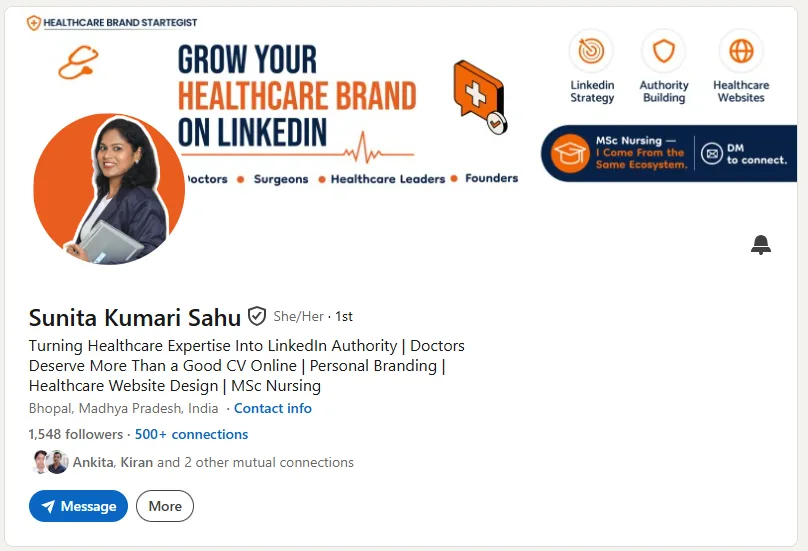
1. Optimize Your LinkedIn Profile for Lead Generation
Before anyone reads your posts, they check your profile.
If it looks like a resume, you’re losing leads before you even start.
Fix these things first:
- Your headline should say what problem you solve, not just your job title
- Your banner image should support your message, not sit blank
- Your About section should speak to your ideal client, not brag about you
- Add a clear way for people to contact you or book a call
2. Define Your Ideal B2B Customer Before Creating Content
You can’t write content that pulls in leads if you don’t know who you’re writing for.
Get specific.
What industry are they in?
What size company?
What keeps them up at night?
The clearer this picture is, the easier your content becomes.
3. Create Content Around Your Audience’s Problems
This is where most people go wrong.
They talk about their product instead of their audience’s pain.
Good B2B content leads with a problem your buyer already has, then shows a way through it.
That’s what makes people stop scrolling.
4. Write LinkedIn Posts That Encourage Conversations
Posts that just state facts don’t go far.
Posts that invite a reply do.
Ask a real question.
Share an opinion people might disagree with.
End your post in a way that makes someone want to comment, not just scroll past.
5. Use Calls-to-Action That Actually Generate Leads
A vague “let me know your thoughts” doesn’t generate B2B leads through LinkedIn.
A clear next step does.
Try things like:
- “Comment ‘guide,’ and I’ll send it over”
- “DM me if you want to chat about this”
- “Link in the comments if you want to try it”
6. Turn LinkedIn Engagement Into Actual Leads
Likes and comments feel good, but they’re not leads yet.
You need a system to follow up.
When someone comments or engages often, reach out with a short, personal message.
Not a sales pitch.
Just a real conversation starter.
7. Use LinkedIn Lead Magnets to Capture Prospects
Offer something useful in exchange for a conversation.
A checklist, template, or short guide works well.
This gives people a reason to raise their hand and tell you they’re interested, which is exactly what generating B2B leads through LinkedIn content is all about.
Also Read: Ways to Generate Business Leads From LinkedIn
Types of LinkedIn Content That Can Generate B2B Leads
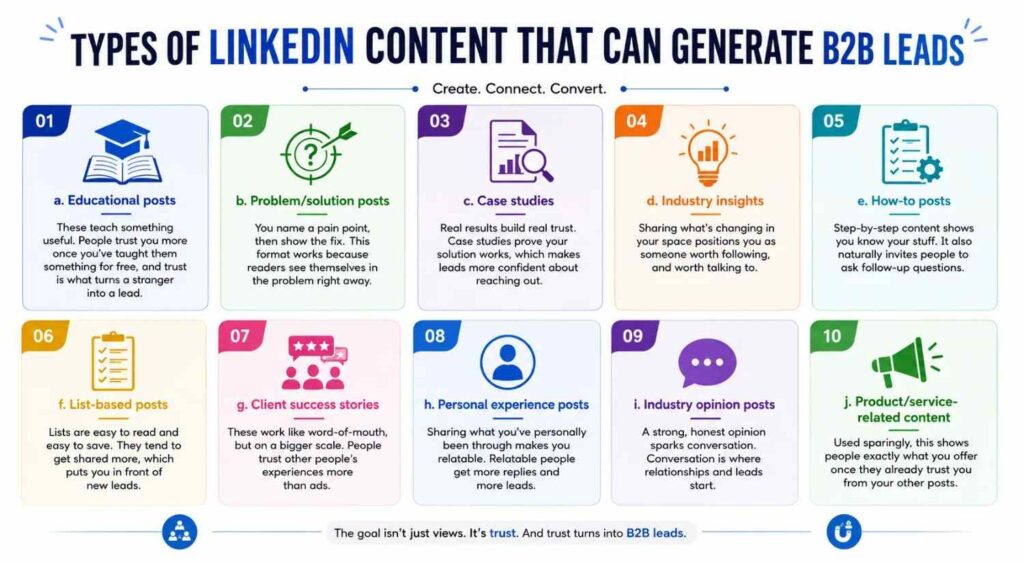
a. Educational posts: These teach something useful. People trust you more once you’ve taught them something for free, and trust is what turns a stranger into a lead.
b. Problem/solution posts: You name a pain point, then show the fix. This format works because readers see themselves in the problem right away.
c. Case studies: Real results build real trust. Case studies prove your solution works, which makes leads more confident about reaching out.
d. Industry insights: Sharing what’s changing in your space positions you as someone worth following, and worth talking to.
e. How-to posts: Step-by-step content shows you know your stuff. It also naturally invites people to ask follow-up questions.
f. List-based posts: Lists are easy to read and easy to save. They tend to get shared more, which puts you in front of new leads.
g. Client success stories: These work like word-of-mouth, but on a bigger scale. People trust other people’s experiences more than ads.
h. Personal experience posts: Sharing what you’ve personally been through makes you relatable. Relatable people get more replies and more leads.
i. Industry opinion posts: A strong, honest opinion sparks conversation. Conversation is where relationships and leads start.
j. Product/service-related content: Used sparingly, this shows people exactly what you offer once they already trust you from your other posts.
How Often Should You Post on LinkedIn?
a. Consistency vs. Volume
Posting five times a day won’t help if the content is weak.
Posting once a week with strong content beats both.
Consistency means showing up regularly enough that your audience starts to expect you.
It doesn’t mean flooding their feed.
b. Creating a Realistic Posting Schedule
Pick a number you can actually stick to.
It’s better to post 3 times a week for six months than to post daily for two weeks and burn out.
c. Repurposing Existing Content
You don’t need a new idea every time.
Turn one blog post into three or four LinkedIn posts.
Break a case study into a story post and a stats post.
Reuse what already works.
d. Why Quality Matters More Than Simply Posting Every Day?
Businesses posting 1 to 2 times per week see roughly double the engagement and much faster follower growth compared to less active pages.
Businesses posting 1–2 times per week gain 2× engagement and 7× faster follower growth than less active pages.
That’s proof that steady, useful posting beats daily noise.
Here’s a simple example you can copy:
- 1 educational post
- 1 problem/solution post
- 1 personal or industry insight post
- 1 case study or promotional post
That’s it. Four posts a week, each with a different purpose.
Conclusion
LinkedIn content shouldn’t be treated simply as a way to increase followers.
When the right audience, useful content, an optimized profile, a strategic call-to-action, and a real follow-up process work together.
LinkedIn becomes a steady channel for B2B leads through LinkedIn content, not a one-time lucky post.
Start small. Pick one content type.
Post consistently.
Follow up on every real conversation.
That’s how this actually works.
Frequently Asked Questions
a. How effective is LinkedIn for B2B lead generation?
Very effective. It’s the leading social platform for reaching B2B decision-makers, and most marketers who use it say it delivers their best-quality leads.
b. How often should a B2B company post on LinkedIn?
Aim for 3 to 4 posts a week. Quality and consistency matter more than posting daily.
c. What type of LinkedIn content generates the most leads?
Educational posts, case studies, and problem/solution posts tend to perform best because they build trust before asking for anything.
d. Should I use a personal LinkedIn profile or company page?
Personal profiles usually get more reach and trust in B2B, but a company page still matters for credibility and should be kept active too.
e. Can small businesses generate B2B leads organically on LinkedIn?
Yes. Organic content works well for small businesses since it builds trust over time without needing a big ad budget.
f. How long does it take to generate leads from LinkedIn content?
Most businesses start seeing real traction after 8 to 12 weeks of consistent posting. It builds slowly at first, then picks up speed.
g. Should I use LinkedIn Ads for B2B lead generation?
Ads can speed things up once your organic content is already working. They’re not a replacement for good content, but a way to amplify it.

Sunita Sahu is a LinkedIn Growth Strategist and Healthcare Website Designer who helps doctors, surgeons, clinic owners, and healthcare founders build authority online. With an MSc in Maternal Nursing and experience in fertility & IVF care, she understands the healthcare industry from the inside. She specializes in transforming medical expertise into a credible digital presence through LinkedIn strategy, thought leadership content, and conversion-focused websites that build trust, strengthen referrals, and generate meaningful opportunities.