Quick Summary

Social media posts and likes don't directly push your business up in Google's local rankings. But they still matter a lot.

A strong social presence builds brand awareness, drives traffic, earns reviews, and gets people searching for your business by name.

In short, social media improve local SEO but indirectly, even though it isn't an official Google ranking factor.
Introduction
If you run a local business, you’ve probably asked yourself this question: does posting on Instagram or Facebook actually help me show up on Google?
It’s a fair question.
You post photos, get a few likes, and wonder whether any of that effort is doing anything for your search rankings.
Here’s the honest answer.
Social media does not improve local SEO in a direct way.
Google doesn’t look at your follower count and bump you up the map pack because of it.
But that doesn’t mean social media is useless for local search.
Far from it.
When used the right way, social media can improve local SEO by building the kind of trust, visibility, and traffic that search engines love to see.
In fact, a growing number of consumers now use social platforms as part of their local search journey.
Studies show that most shoppers check social media before choosing a local business to spend money with.
Let’s break this down step by step, in plain and simple language.
Is Social Media a Direct Local SEO Ranking Factor?
This is where most confusion starts.
A lot of business owners believe that more likes or shares equal higher rankings on Google.
That’s simply not true.
a. Clearing Up the Myth
Google has never confirmed that likes, followers, or shares are used to rank websites in local search results.
Google’s local ranking system mostly looks at three things:
how close your business is to the searcher, how relevant your business is to the search, and how well known or trusted your business is online.
Social media activity is not part of that direct formula.
So no, a viral post won’t magically push you to the top of Google Maps.
b. Direct vs Indirect SEO Benefits
There’s a big difference between a direct ranking factor and an indirect benefit.
A direct factor is something Google actually measures and scores, like your Google Business Profile or your website content.
An indirect benefit is something that helps your SEO in a roundabout way.
Social media falls into this second group.
It doesn’t get scored by Google directly, but it creates ripple effects that do help your rankings over time.
How Does Social Media Improve Local SEO?
Even though social platforms aren’t a direct ranking signal, they still play a real supporting role.
Here’s how.
a. Increase Local Brand Awareness
The more people in your area recognize your business name, the more likely they are to search for it, click on it, and trust it.
Social media puts your name in front of local eyes every day.
b. Drive Traffic to Your Website
Every post with a link sends a small wave of visitors to your site.
More visits, especially from local users, signal to Google that real people care about your business.
c. Encourage Branded Searches
When people see your business on social media, many of them go to Google afterward and type in your business name.
These branded searches are a strong trust signal for local rankings.
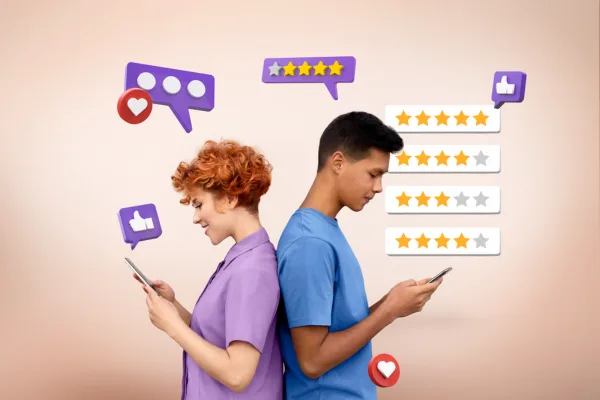
d. Generate Reviews and Customer Engagement
Social media is a great place to remind happy customers to leave a review.
Reviews are one of the biggest local ranking factors, so this connection matters more than people realize.
e. Build Local Authority and Mentions
When local influencers, news pages, or community groups tag or mention your business on social media, it builds authority.
These mentions, even without a link, add to your credibility.
f. Promote Local Content
Got a blog post about a local event or a neighborhood guide?
Sharing it on social media gets more eyes on it, which can lead to more shares, more visits, and sometimes even backlinks.
Here’s a quick list of the ripple effect in action:
a. More brand awareness leads to more branded searches
b. More website traffic signals relevance to Google
c. More reviews build trust and rankings
d. More mentions build authority
e. More shared content builds backlinks over time
This chain reaction is exactly why so many marketers say social media can improve local SEO, even without being an official ranking factor.
The numbers back this up too.
Research shows that most consumers use social media while researching local businesses, and many expect a business to stay active and responsive online.
Reviews matter just as much.
Studies have found that most consumers trust online reviews as much as advice from friends, and businesses that respond to reviews earn more trust from future customers.
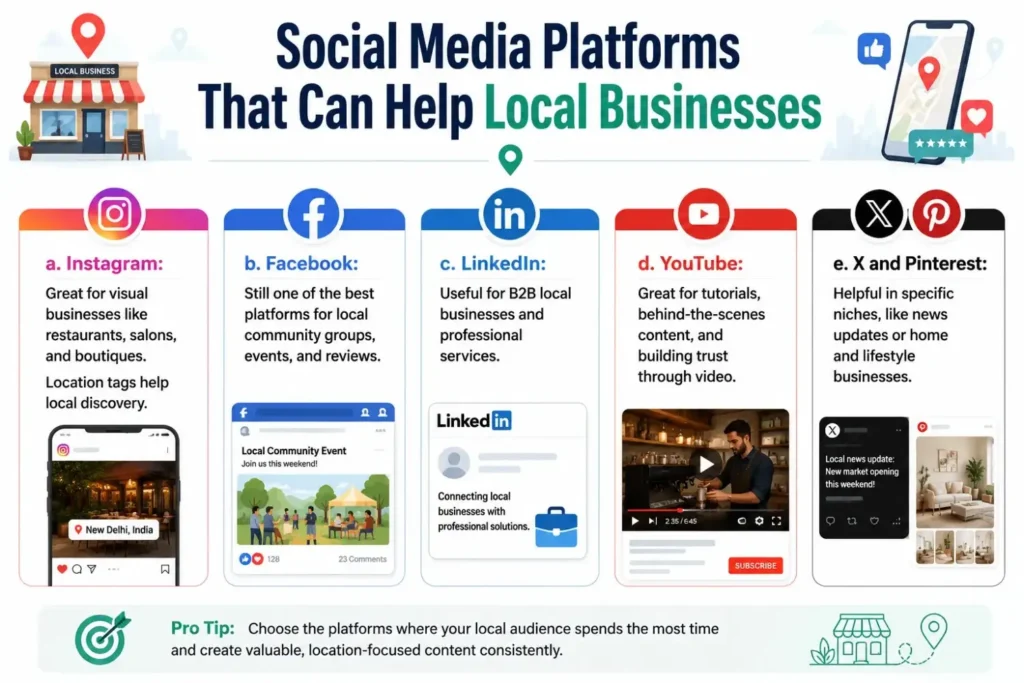
Social Media Platforms That Can Improve Local SEO
Not every platform works the same way for every business.
Here’s a quick rundown.
a. Instagram: Great for visual businesses like restaurants, salons, and boutiques. Location tags help local discovery.
b. Facebook: Still one of the best platforms for local community groups, events, and reviews.
c. LinkedIn: Useful for B2B local businesses and professional services.
d. YouTube: Great for tutorials, behind-the-scenes content, and building trust through video.
e. X and Pinterest: Helpful in specific niches, like news updates or home and lifestyle businesses.
You don’t need to be active on every single platform. That’s a myth too.
The smarter move is to figure out where your local customers actually spend their time, and focus your energy there.
A small business that picks two platforms and stays consistent will usually see better results than one that spreads itself thin across five accounts.
This is another quiet way social media can improve local SEO, since consistent, focused activity is easier to maintain and easier for customers to find.
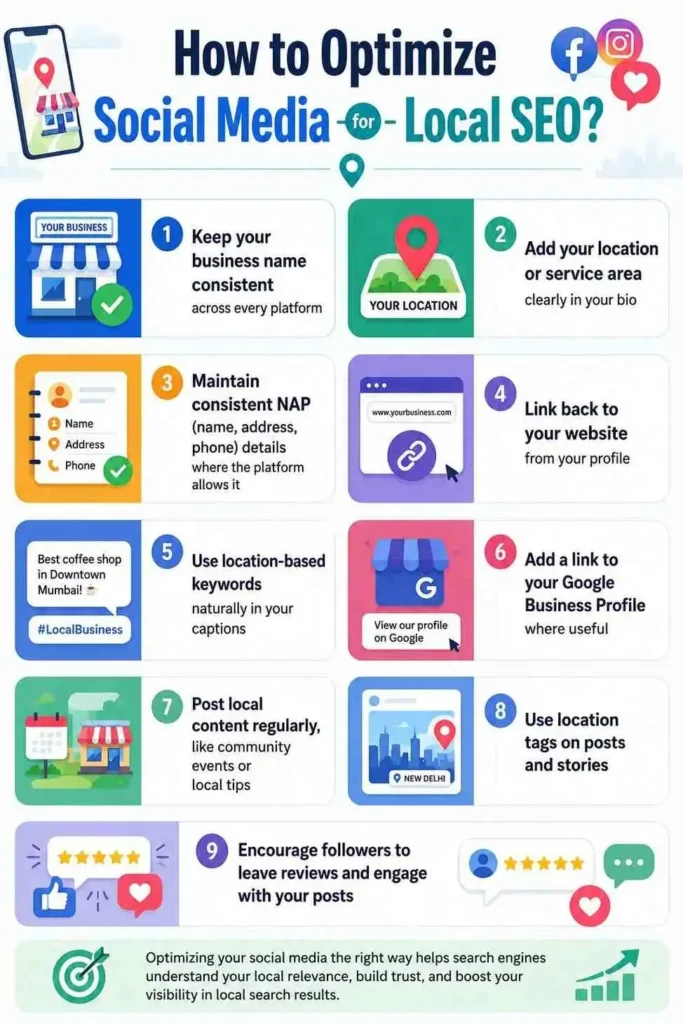
How to Optimize Social Media for Local SEO?
If you want your social profiles to actually support your search visibility, a few small tweaks make a big difference.
a. Keep your business name consistent across every platform
b. Add your location or service area clearly in your bio
c. Maintain consistent NAP (name, address, phone) details where the platform allows it
d. Link back to your website from your profile
e. Use location-based keywords naturally in your captions
f. Add a link to your Google Business Profile where useful
g. Post local content regularly, like community events or local tips
h. Use location tags on posts and stories
i. Encourage followers to leave reviews and engage with your posts
None of these steps are complicated.
They just require a bit of consistency.
Put together, these small habits are a simple, practical way social media can improve local SEO without needing a big budget or a marketing team.
Conclusion
Let’s bring this back to the core point.
Social media does not replace local SEO.
It won’t directly push you higher in Google’s local map pack just because you post more often.
But it plays a real supporting role in the bigger picture.
When you build a strong local reputation, drive traffic, earn reviews, and get people talking about your business, you’re creating exactly the kind of signals that search engines value.
That’s how social media can improve local SEO in a real, measurable way, even though it works behind the scenes.
The best approach isn’t to pick one tactic over another.
Combine a well-optimized Google Business Profile, solid on-site SEO, consistent reviews, and an active social presence with local content.
Together, these pieces build an ecosystem that search engines and customers both trust.
Also Read: How To Optimize Google Business Profile For Local SEO?
Frequently Asked Questions
a. Does Instagram improve Google rankings?
Not directly. Instagram doesn’t feed data directly into Google’s ranking system, but it helps drive traffic, awareness, and branded searches that indirectly support your rankings.
b. Does Facebook help local SEO?
Yes, indirectly. Facebook helps through reviews, local group visibility, event promotion, and driving traffic to your website.
c. Are social media followers a Google ranking factor?
No. Google has confirmed that follower counts and social signals are not used as direct ranking factors.
d. Should a local business have social media accounts?
Yes. Even without a direct SEO boost, social media builds trust, awareness, and customer relationships that support your overall local presence.
e. Which social media platform is best for local SEO?
It depends on your industry and your audience. Visual businesses often do well on Instagram, while community-driven businesses often see stronger results on Facebook.
f. Can social media help Google Business Profile visibility?
Yes. Sharing your Google Business Profile link and encouraging reviews through social media can boost engagement, which supports your visibility over time.

Subham Kakrania is an organic marketer and web developer specializing in custom SEO strategies that drive measurable business growth. From technical audits to high-converting web design, he helps brands scale their organic visibility, outsmart the competition, and turn search traffic into loyal customers.