Key Takeaways

- Create a clear and compelling headline and communicate your main value proposition with a clear, attention-grabbing headline.
- Keep the landing page design simple and clutter-free; use clean layouts and whitespace to eliminate distractions and maintain visitor focus.
- Use a strong and visible CTA; add prominent, action-oriented call-to-action buttons that encourage visitors to take the next step.
- Optimize for mobile devices; ensure your landing page is responsive, mobile-friendly, and easy to navigate across all screen sizes.
- Use high-quality and relevant visuals; incorporate engaging images and videos that showcase your product or service effectively.
- Use high-quality and relevant visuals; incorporate engaging images and videos that showcase your product or service effectively.
- Focus on fast loading speed; optimize images, code, and caching to ensure your landing page loads quickly.
- Write persuasive and benefit-driven content; highlight customer benefits, address pain points, and use concise, easy-to-scan content.
- Build trust with social proof and testimonials: showcase genuine customer reviews, ratings, testimonials, and client logos to establish credibility.
- Keep landing page forms short and simple: minimize form fields and request only essential information to reduce friction.
- Conduct a/b testing and optimize regularly: test different headlines, CTAs, visuals, and layouts to improve landing page performance and conversions.
Introduction
Have you ever clicked on an ad, arrived at a website, and felt confused about what to do next?
You are not alone. That usually happens when a web page lacks clear landing page design.
A landing page is a standalone web page created for a specific marketing campaign.
It is the page where a visitor lands after clicking a link in an email, a social media ad, or a search engine result.
Why is an effective landing page so important for your business?
Unlike a standard homepage that has dozens of links, a landing page focuses on one single goal.
That goal could be collecting email sign-ups, selling a product, or scheduling a free phone call.
Good landing page design guides visitors smoothly toward taking action.
When your page looks clean, loads fast, and speaks directly to user needs, your conversion rates jump significantly.
In this guide, we will break down 10 simple best practices for landing page design.
These practical tips will help you create pages that turn casual clicks into real business growth.
10 Best Practices for Landing Page Design
1. Create a Clear and Compelling Headline
Your headline is the first thing visitors see when they open your page. You have only a few seconds to catch their attention and make them stay.
A great headline clearly states the main benefit of your offer.
Keep it bold, clear, and easy to understand.
Avoid complicated buzzwords or confusing slogans.
Your headline should tell visitors exactly what problem you can solve for them right away.
2. Keep the Design Simple and Clutter-Free
When a web page has too many banners, pop-ups, and sidebars, visitors feel overwhelmed.
A crowded layout forces people to think too hard, which causes them to leave.
A clean landing page design removes all extra distractions.
Use plenty of white space around your text blocks and images.
This breathing room makes your page feel calm and easy to navigate. It keeps the visitor focused entirely on your main offer.
3. Use a Strong and Visible Call-to-Action (CTA)
Your Call-to-Action button is the most critical element on the entire page.
It tells visitors exactly what step to take next, such as “Claim Your Free Trial” or “Download the Guide Now.”
Make sure your CTA button stands out visually.
Use a vibrant color that contrasts sharply with the background color of your page.
Place your primary CTA near the top of the page so visitors can see it without scrolling down.
4. Optimize Your Landing Page for Mobile Devices
Today, mobile devices account for roughly 60% of all global web traffic.
If your landing page looks broken or hard to read on a smartphone screen, you are losing more than half of your potential customers instantly.
Building Mobile-Friendly Websites ensures that your page layout automatically adjusts to fit any screen size.
Text should remain large enough to read comfortably without zooming.
Buttons must be big enough for easy thumb tapping.
5. Use High-Quality and Relevant Visuals
Images and short videos can explain your product much faster than paragraphs of text.
Visual elements draw the eye and create an emotional connection with your audience.
However, avoid using generic stock photos that look artificial.
Instead, use real photos of your product, your team, or your actual customers.
High-quality visuals give your landing page design a professional touch that builds immediate trust.
6. Focus on Fast Landing Page Loading Speed
Speed matters immensely when it comes to online conversions.
Research shows that a site loading in one second can convert three to five times better than a site taking five seconds.
Even worse, Google research reveals that 53% of mobile visits are abandoned if a page takes longer than three seconds to load.
To keep your landing page design fast, compress your image files, clean up unnecessary code, and use modern browser caching.
7. Write Persuasive and Benefit-Driven Content
Do not just list the technical features of your product. Instead, explain how those features will solve a real problem or make your customer’s life easier.
Use short paragraphs, simple vocabulary, and quick bullet points.
Bullet points break up long blocks of text and make your key benefits easy to scan.
Benefit-driven copy directly addresses visitor concerns, making your landing page design far more effective.
8. Build Trust With Social Proof and Testimonials
Online shoppers can be hesitant when dealing with new businesses.
Adding genuine social proof helps reassure them that your offer is legitimate and reliable.
Include elements like:
- Direct quotes from happy customers
- Star ratings and review scores
- Logos of well-known client companies
- Trust badges and security seals near checkout areas
Displaying real feedback proves to new visitors that others have had a great experience with your company.
9. Keep Your Landing Page Forms Short and Simple
If your lead form asks for too much information, visitors will get tired and close the tab.
Long forms create friction in the conversion process.
Only ask for the information you truly need to follow up.
For example, a simple name and email address field is often enough for a newsletter or guide download.
Short forms feel quick and painless to complete.
10. Conduct A/B Testing and Optimize Regularly
Even a well-designed page can always perform better.
A/B testing allows you to compare two different versions of your page to see which one performs best.
Try testing different variations of:
- Your main headline wording
- CTA button colors and text
- Hero image selections
- Lead form lengths
By testing one change at a time, you can rely on real user data to steadily improve your landing page design over time.
Common Landing Page Design Mistakes to Avoid
Even experienced digital marketers make simple errors that lower their conversion rates.
Here are key mistakes you should actively avoid:
- Using unclear headlines: Vague or overly clever headlines confuse visitors about what you actually offer.
- Having too many CTA buttons: Offering multiple competing choices makes visitors hesitate and leave without taking any action.
- Ignoring mobile responsiveness: Failing to optimize for smartphone users creates a clunky and frustrating user experience.
- Adding lengthy copy: Overloading the page with dense blocks of text bores readers and hides your main message.
- Using slow-loading images: Large image files drag down page speed, causing high bounce rates.
- Creating complicated forms: Asking for unnecessary personal details pushes potential leads away.
- Neglecting trust signals: Omitting customer reviews or security badges makes your business look unverified.
- Not tracking conversions: Running campaigns without analytics tools prevents you from knowing what is working.
Essential Landing Page Design Elements
To ensure your web page is complete, make sure it includes these ten fundamental building blocks:
- Headline and Subheading: Grabs immediate attention and clearly states your core message.
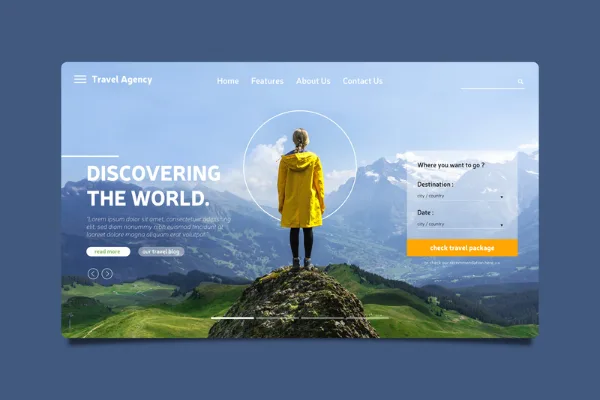
- Hero Section: The top area of the page that showcases your main offer alongside an eye-catching visual.
- Value Proposition: Explains clearly why your solution is better than competing options.
- Primary CTA Button: A high-contrast button that prompts the visitor to take immediate action.
- Relevant Visuals: High-resolution photos, graphics, or short videos that support your message.
- Benefits and Features Section: Highlights how your product helps the user in daily life.
- Testimonials and Social Proof: Displays authentic reviews and ratings from real users.
- Lead Capture Form: A simple input box where visitors submit their contact details.
- FAQ Section: Answers common questions to clear up buying hesitation quickly.
- Footer With Links: Contains links to your privacy policy, terms of service, and contact page.
Conclusion
Great landing page design is one of the most powerful tools for growing your business online.
By keeping your page clutter-free, writing benefit-driven text, and using bold CTA buttons, you can easily guide visitors toward making a decision.
Always keep user experience at the center of your strategy.
Ensure your pages load quickly and display beautifully on smartphones just as well as on desktop computers.
Remember that optimizing your landing page design is an ongoing project.
Monitor your page traffic, test new ideas regularly, and keep making small improvements based on user behavior.
Looking to boost your conversion rates? Sunita Sahu is a professional website designer ready to help you craft a high-converting landing page design tailored to your business needs. Head over to the contact page today to get started.
Frequently Asked Questions
1. What are the best practices for landing page design?
The core best practices for landing page design include writing clear headlines, keeping the layout simple, using high-contrast CTA buttons, optimizing for mobile devices, speeding up load times, and using social proof to build trust.
2. What makes a landing page effective?
An effective landing page focuses on a single goal. It removes extra navigation links, uses persuasive copy, highlights clear customer benefits, and makes it effortless for visitors to fill out forms or complete purchases.
3. How can I improve my landing page conversion rate?
You can improve your conversion rate by making your CTA button easy to spot, shortening your lead forms, adding customer reviews, speeding up page loading times, and running regular A/B tests on your headlines.
4. What elements should a good landing page include?
A complete landing page should include a clear headline, hero visual, value proposition, CTA button, benefit list, customer testimonials, lead form, FAQ section, and footer links.
5. How important is mobile responsiveness in landing page design?
Mobile responsiveness is vital because more than half of all web traffic comes from mobile devices. A responsive landing page design ensures your layout looks great and functions smoothly on any screen size.

Subham Kakrania is an organic marketer and web developer specializing in custom SEO strategies that drive measurable business growth. From technical audits to high-converting web design, he helps brands scale their organic visibility, outsmart the competition, and turn search traffic into loyal customers.